Window Education
What Affects the Cost of Window Replacement
By Jeremy Holzmeister · · 7 min read
The cost of window replacement is one of the first questions homeowners ask, and honestly, it's also one of the hardest to answer without more information. Not because the numbers are secret, but because the range is genuinely wide, and where your project lands depends on a handful of specific factors that interact with each other. This post breaks down the main drivers so you can go into the process with realistic expectations.
If you're already looking at options, our replacement windows page covers the product lines we carry and what makes each one a good fit for different situations.
Window Size and Count
This one is obvious once you think about it, but it trips people up in estimates. A larger window requires more material, a more involved frame opening (sometimes), and more labor time to set and seal properly. Standard double-hung windows in a typical bedroom or hallway fall into a fairly predictable size range. Oversized windows, custom shapes, or picture windows that span a large wall are a different story.
Count matters just as much. Replacing all the windows in a home at once is usually more cost-efficient per window than doing them one at a time. Crews can batch their setup, disposal, and caulking work. If you're on the fence about replacing a few aging units versus doing a whole-home refresh, it's worth getting a full-house assessment to see if the math favors going bigger.
Frame Material
This is where a lot of the variation comes from. The three most common materials we work with at Innovate Window and Door are vinyl, fiberglass, and wood (or wood-clad).
Vinyl is the most popular choice in Western Colorado for a few reasons. It holds up well in our climate, requires minimal maintenance, and tends to land at a lower price point than the alternatives without sacrificing performance. Good vinyl windows from brands like ProVia or Andersen are not cheap vinyl. They're engineered products with multi-chamber frames, reinforced corners, and weather seals that last.
Fiberglass is the premium option. It's dimensionally stable, meaning it doesn't expand and contract as much with temperature swings, which matters a lot here given the difference between a January night and a July afternoon on the Western Slope. Fiberglass windows generally carry a higher upfront cost but tend to outperform vinyl over a longer time horizon.
Wood and wood-clad windows are the choice when aesthetics are the priority, often in historic homes or custom builds where the interior look of real wood matters. They require more maintenance than either vinyl or fiberglass. The cost reflects the material and the craftsmanship involved in manufacturing them.
Glass Package and Performance Specifications
The glass itself is a bigger cost variable than most people expect. Single-pane windows are essentially obsolete in new installations for good reason. Double-pane is standard. Triple-pane is increasingly common in high-performance builds and whole-home energy upgrades.
Beyond pane count, you're looking at a few key specifications.
Low-e coatings on the glass surface reduce heat transfer without blocking natural light. In a climate like Montrose's, where you want solar gain in winter but need to block heat in summer, the specific low-e configuration matters. Different products optimize for different orientations and climates.
Gas fills also affect performance. Most insulated glass units are filled with argon or krypton gas between the panes. Both slow heat transfer better than air does. Krypton performs better in narrower spaces; argon is the more common choice in standard double-pane units.
Specialized coatings round out the glass options. Impact-resistant glass, acoustic glass for homes near busy roads or flight paths, or decorative options like obscure glass for bathrooms all affect the overall cost of the glass package.
If you're replacing windows primarily for energy savings, the glass package is probably the most important spec to get right. We walk through this in detail as part of our process.
Installation Complexity
Labor is not a fixed number. It varies based on what the installer actually encounters when they show up.
A straightforward replacement in a wood-framed home with accessible windows on the ground floor and no rot or structural issues is the easiest scenario. The old unit comes out, the new one goes in, and the work moves quickly.
A few things add time and cost significantly.
Rot in the sill or rough opening is probably the most common surprise. In older homes, water intrusion around window frames can damage the surrounding structure. That wood has to be repaired or replaced before the new window goes in, otherwise you're just putting new windows into a damaged shell.
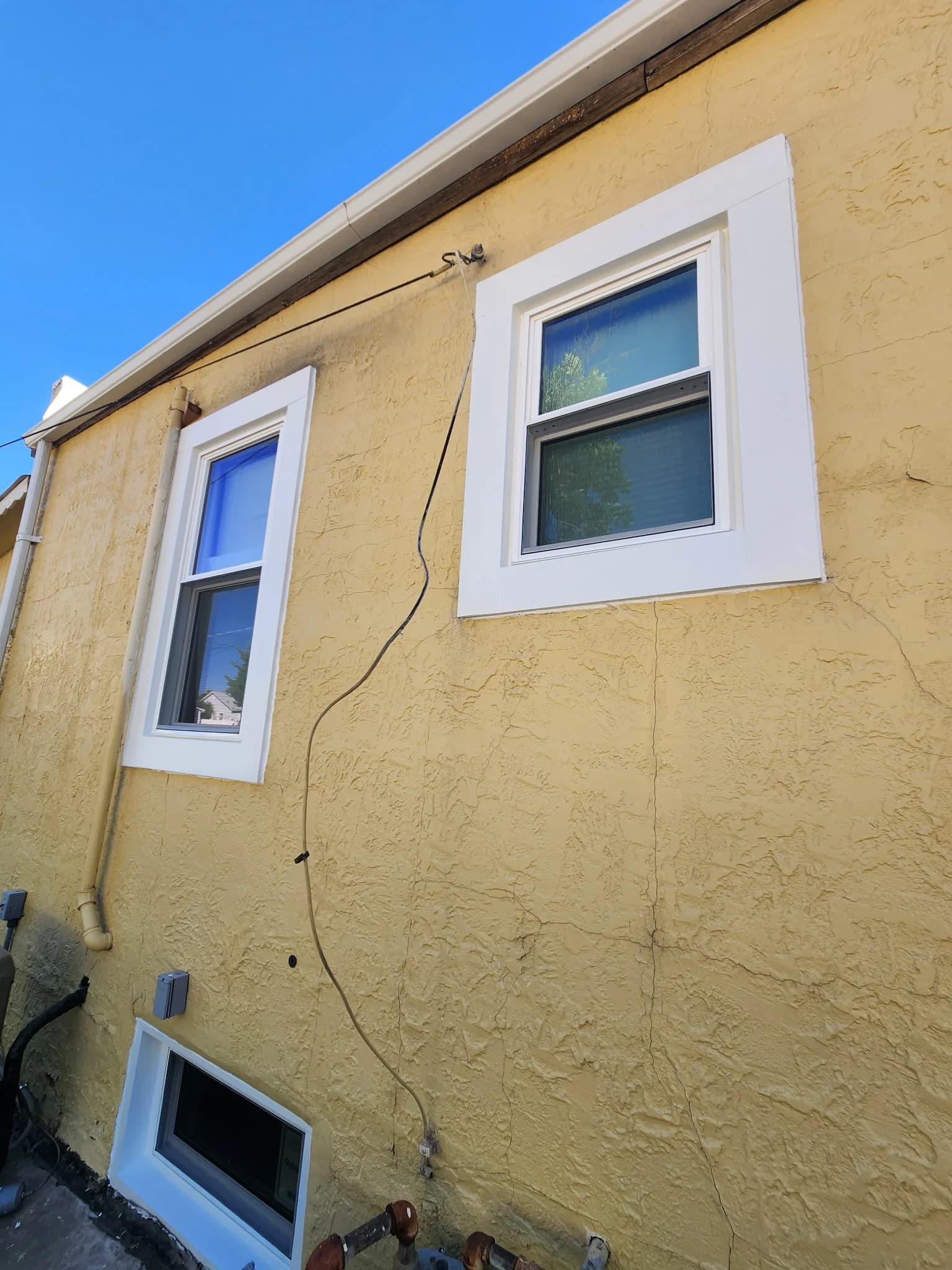
Stucco exteriors, common throughout Western Colorado, require careful handling. Cutting into stucco to resize an opening or replace flashing takes more time and more care than wood siding does. Getting it wrong creates water intrusion points.
High or hard-to-reach windows require scaffolding or lifts for safe installation. A second-floor window in a standard two-story home is usually manageable with a ladder. A window on a steep-roofline dormer or a tall commercial-style clerestory is a different job.
Accessibility inside the home also matters. Windows behind built-in cabinetry, in tight alcoves, or in finished spaces where the crew needs to protect flooring and trim take longer to work around.
The Brand and Product Line
Not all windows are priced the same, even in the same material category. An entry-level vinyl window from a big-box supplier and a ProVia or Pella window from a professional installer are different products. The difference shows up in the frame engineering, the seal quality, the hardware, the warranty, and ultimately in how the window performs a decade from now.
We carry ProVia, Andersen, and Pella because they hold up. We've seen cheaper windows fail well before they should, and the cost of re-doing that work always exceeds whatever was saved upfront.
That doesn't mean you need the most expensive option in the lineup. Part of what we do during the quoting process is help you identify where spending more actually buys something, and where the mid-range product performs just as well for your specific situation.
What You Can Do Before Getting a Quote
A few things that will make the estimate process go faster and give you more accurate numbers.
Know your window count and have rough measurements. You don't need to be exact, but knowing you're replacing twelve windows versus four sets the scope before anyone shows up.
Think about your priorities. Are you replacing windows primarily for energy efficiency? Aesthetics? Noise reduction? Ease of cleaning? The answer shapes which products make sense.
Note anything unusual. If you know there's rot around a particular window, or that one window is in a hard-to-reach spot, mention it early. Surprises late in a project are more expensive than surprises disclosed upfront.
Getting an Accurate Number
The honest answer is that the only way to get an accurate window replacement cost for your home is to have someone look at it. Every variable above affects the final number, and those variables interact. A home with fourteen windows, half of which have rotted sills and two of which need custom sizing, is a fundamentally different project from a home with fourteen standard windows in sound frames.
We do in-home assessments for exactly this reason. You get a real number, not a range pulled from a national average that may have nothing to do with your house in Montrose or Olathe or Ridgway.
Contact us to schedule a time. We'll walk the home with you, look at what's actually there, and put together a proposal that reflects the real scope of the work.
About the author
Jeremy Holzmeister is the founder of Innovate Window and Door, a locally owned window and door company in Montrose, Colorado, with more than fifteen years of experience in the trade. Learn more about our team.