
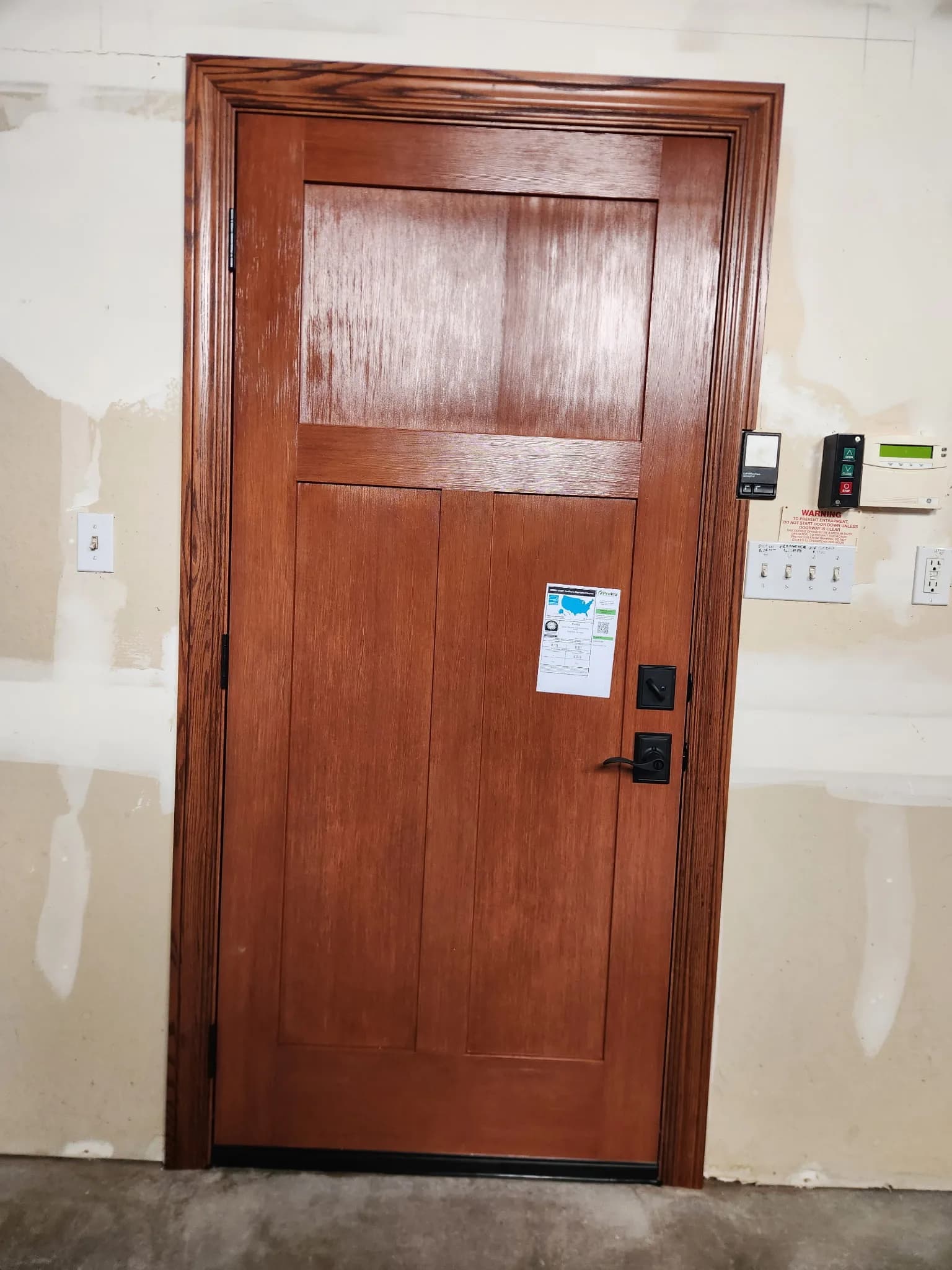
Commercial door hardware installation in Telluride, CO
The hardware on your commercial door determines whether it performs, passes inspection, and keeps working five years from now.
Commercial door hardware is not a detail to source as an afterthought. The closer, latching device, hinge specification, and any electrified components all have to be coordinated with the door and frame to function correctly and meet code. Innovate Window and Door works with our suppliers' hardware catalogs to specify and install closers, exit and panic devices, ADA-compliant locksets, and electrified access control components for commercial projects across Western Colorado.
Commercial-grade door closers
Surface-mounted and concealed closers specified for the door's size, weight, and usage frequency. We select closer size and backcheck settings for each opening rather than defaulting to a single catalog choice across the whole building.
Exit and panic devices
UL-listed panic hardware for egress openings, specified to meet the IBC requirements for the occupancy load and occupant type. We install rim, mortise, and concealed vertical rod devices depending on the door configuration and code requirement.
ADA-compliant locksets and pulls
ADA-compliant lever handles, pulls, and locksets that meet the force, mounting height, and operability requirements for accessible commercial buildings, including those serving the public in retail, hospitality, and healthcare occupancies.
Electrified hardware and access control integration
Electrified strikes, electrified mortise locks, and magnetic hold-opens for buildings with card access or keypad systems. We coordinate the hardware specification with your access control installer to ensure electrical compatibility.
Why hardware specification is where commercial door projects go wrong
Contractors and property owners often treat door hardware as a commodity: pick something that fits the hole, order the cheapest thing that looks right, and move on. That approach produces buildings full of closers that fail in year three, panic hardware that was never rated for the occupancy load, and ADA violations that show up in the first accessibility audit. The hardware on a commercial door is not a commodity. It's a system of engineered components that has to work together, meet code, and hold up to whatever the building throws at it.
The commercial hardware we source covers the full specification range: closers from light-duty interior applications through heavy-duty exterior use, exit devices for high-occupancy egress, mortise and cylindrical locksets, ADA-compliant lever trim, and electrified hardware for access-controlled openings. Innovate Window and Door specifies from this catalog based on the specific requirements of each opening: the door size and weight, the usage frequency, the code requirement (egress, rated assembly, ADA), and the access control system already in place or being designed.
The most common hardware failures we see in commercial buildings come from mismatched specifications:
- Closers undersized for the door weight or undersized for the wind load at the opening
- Panic hardware installed on doors where the UL listing doesn't match the fire assembly
- Locksets that are technically ADA-compliant in force but mounted at the wrong height
- Electrified hardware wired incorrectly for the access control system's fail-safe or fail-secure requirement
We catch those issues in the specification phase, not during the building inspection. Learn more about the complete commercial door systems we install, including hollow metal doors and fire-rated assemblies.
ADA compliance, egress codes, and the hardware details that matter in Western Colorado
Commercial buildings open to the public have ADA hardware requirements that go beyond just using a lever instead of a round knob. The mounting height range for handles and pulls is 34 to 48 inches above the finished floor. The maximum operating force for interior doors is 5 pounds. The closing speed on door closers has to allow enough time for a person using a mobility aid to clear the doorway. And the threshold height and beveling requirements affect what's acceptable under the door.
Exit and panic device requirements come from IBC Chapter 10 and vary based on the occupancy type and occupant load. A retail space with an occupancy load above a certain threshold requires panic hardware on the egress doors regardless of whether the property manager thinks it looks commercial enough. Getting that wrong creates both a code violation and a real life-safety problem.
Innovate Window and Door handles hardware for commercial projects in Montrose, Telluride, Gunnison, Grand Junction, and across the Western Colorado region. We bring the hardware knowledge to your project so the door inspector and the accessibility reviewer find nothing to flag. Request a consultation or explore our process for commercial door and hardware projects.
Frequently asked questions
The terms are often used interchangeably but technically refer to different products. Exit devices are the broader category of hardware that allows a door to be opened from the inside by pushing a bar or paddle, without requiring the user to grasp or twist anything. Panic hardware is a specific subset of exit devices that has been listed and labeled by a recognized testing laboratory (usually UL) for use on required egress doors in high-occupancy buildings. The IBC specifies when labeled panic hardware is required based on occupancy type and occupant load. Using a standard exit device where a listed panic device is required is a code violation even if the hardware looks similar.
Closer sizing is based on door width, door weight, and the conditions at the opening. ANSI/BHMA standards publish closer size recommendations by door width as a starting point, but exposed exterior openings subject to wind loading often need a larger closer than the door size alone would suggest. An oversized closer on a light interior door creates ADA compliance problems because the opening force exceeds the 5-pound maximum. An undersized closer on a heavy exterior door fails to close the door completely in windy conditions. We select closer size and spring tension based on the specific opening, not a one-size-fits-all default.
Usually yes, though the details depend on what's there and what's going in. Most commercial hardware is designed for standard prep locations, and replacing like for like is generally straightforward. Upgrading from a cylindrical lockset to a mortise lockset requires a different door prep, which means either modifying the existing door or replacing it. Adding electrified hardware to a door that wasn't prepped for it may require core drilling and possibly modifications to the frame. We'll assess what you have and tell you honestly whether the upgrade you want is a simple swap or a more involved modification.
These terms describe what happens to the lock when the power fails. Fail-safe hardware unlocks when power is lost, ensuring people can exit in a fire or emergency even if the electrical system fails. Fail-secure hardware stays locked when power is lost, maintaining security even during an outage. The right choice depends on the opening's function: egress doors and fire-rated openings typically require fail-safe operation so they don't trap occupants. Access-controlled doors where security is the primary concern may use fail-secure. Your access control integrator and the applicable life-safety codes will drive the specification; we make sure the hardware we install matches that requirement.
Specify the right hardware for your commercial doors
Contact Innovate Window and Door for a commercial door hardware consultation in Montrose or anywhere in Western Colorado.