
Window & Door Installation in Downtown & North Seventh
Historically-appropriate windows and doors for the Victorian, Craftsman, and Colonial Revival homes of downtown Grand Junction's North Seventh Street Historic District.
The Downtown Historic Neighborhood and Its Homes
Just north of downtown Grand Junction, the North Seventh Street Historic Residential District is the most intact historic residential area in the city. Listed on the National Register of Historic Places in 1984, the five-block district runs along a wide, tree-lined boulevard with a grassed median, and its roughly 14 acres include some of the finest period homes in Mesa County.
Developed between the 1890s and the 1930s, the neighborhood is a living catalog of turn-of-the-century American architecture. You'll find:
- Queen Anne Victorians with wraparound porches, decorative trim, and tall double-hung windows
- Craftsman bungalows with deep eaves, exposed rafter tails, and divided-light sashes
- Colonial Revival and Foursquare homes with symmetrical facades and classic proportions
- Touches of Mission style and other early-20th-century revivals
Homeowners here tend to be preservation-minded, and many houses still carry their original wood windows and doors. That history is exactly what makes the neighborhood special, and it's also what makes window and door decisions more nuanced than they would be in a newer subdivision.
Window & Door Challenges Unique to a Century-Old Home at Altitude
Grand Junction sits at roughly 4,600 feet of elevation, and the Grand Valley delivers a punishing combination of stresses on aging windows: around 300 days of sun a year, intense high-altitude UV, big day-to-night temperature swings, and dry, dusty winds. When you layer that climate onto homes that are 90 to 130 years old, a few problems show up again and again.
What we typically see in North Seventh Street homes
- Drafty, single-pane original sashes that rattle, stick, or have failed glazing putty and worn weatherstripping
- Sun-faded interiors where decades of UV have bleached hardwood floors, trim, and furnishings
- Rotted or painted-shut wood at sills and lower rails where moisture and sun have done their work
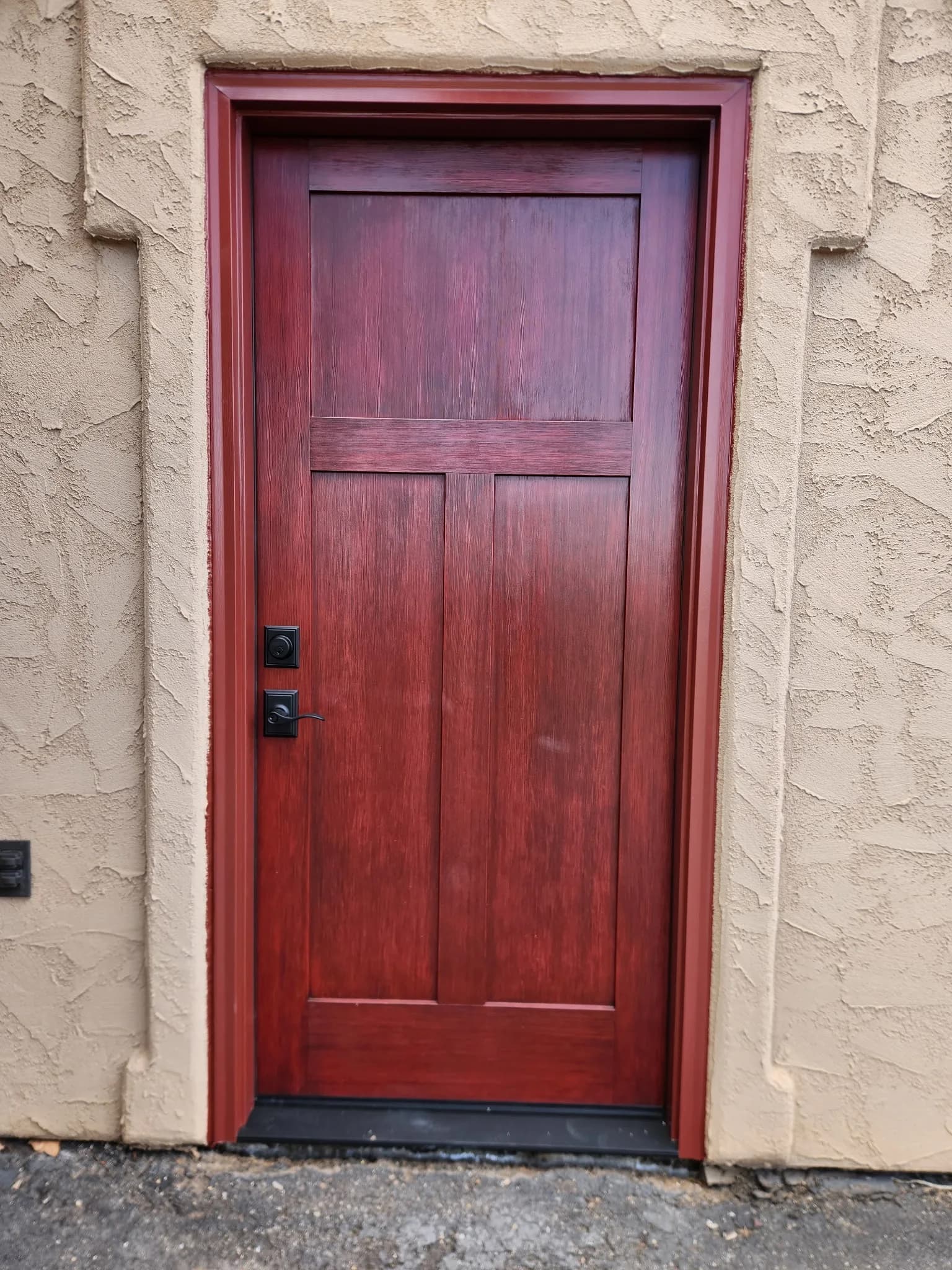
- Original entry and storm doors that no longer seal, leaking conditioned air in summer and heat in winter
- Hot west- and south-facing rooms in summer and cold, uncomfortable rooms in winter
The goal in this neighborhood is rarely to erase a home's character. It's to preserve the look that belongs on the street while quietly solving the comfort and efficiency problems that single-pane glass simply can't. That balance is the heart of every project we take on here.
Restoration-Friendly Products We Recommend Here
Because so many of these homes prize their period appearance, we lean toward windows and doors that reproduce historic proportions, sightlines, and grille patterns while delivering modern, high-altitude performance. We install three trusted lines and match the right one to your home and budget.
Wood and clad-wood for true historic character
Andersen A-Series and E-Series windows offer authentic double-hung profiles, narrow sightlines, simulated divided lites, and an exterior aluminum clad finish over a real wood interior, which suits Queen Anne and Colonial Revival homes that need their original look honored. Pella wood and fiberglass windows are another strong fit where you want classic detailing with low-maintenance durability.
Fiberglass and premium vinyl for value and toughness
Pella fiberglass stands up beautifully to the Grand Valley's UV and temperature swings, while ProVia Aeris and Aspect windows deliver excellent energy numbers and crisp colonial grille options at a more accessible price point. ProVia also builds some of the best entry and patio doors we install, with the kind of solid feel and weather sealing an old front porch deserves.
High-altitude glass that matters at 4,600 feet
Every unit we recommend uses Low-E coatings tuned for intense UV to protect your interiors, and for our elevation we specify high-altitude / capillary-tube glass so the sealed insulating units don't bow or fail as barometric pressure changes between the valley floor and the surrounding mesas. Explore the full range of replacement windows we offer.
Historic Review, Approvals, and a Smooth Local Process
Grand Junction has a Historic Preservation Board, and exterior changes to designated historic properties can require review and a Certificate of Appropriateness before work begins. Not every home on or near North Seventh Street carries the same designation, so the first step is always confirming what applies to your specific address.
As a local company headquartered in Montrose and working throughout Mesa County, we're comfortable with that process. Here's what working with us looks like:
- An in-home assessment of your existing windows and doors, with honest guidance on what should be repaired or restored versus replaced
- Product recommendations that match historic sightlines, grille patterns, and materials so your changes read as appropriate to the era
- Documentation and spec sheets you can bring to the city or preservation board if review is required
- Careful measurement, professional installation, and clean removal that respects original trim and plaster
Because we're regional, we're not a national call center routing you to an out-of-town crew. When you have a question before, during, or after the job, you reach the people who actually did the work. Reach out for a free in-home consultation and we'll walk your home with you.
Comfort, Energy Savings, and Protecting What Makes Your Home Special
The payoff for the right windows and doors in a historic Grand Junction home is immediate and lasting. Modern insulating glass with high-altitude Low-E ends the drafts, evens out room-to-room temperatures, and dramatically cuts the UV fading that has dulled woodwork and floors for decades.
You can expect:
- Lower heating and cooling bills as failed single-pane glass is replaced with efficient insulated units
- Quieter, more comfortable rooms that hold temperature through the valley's big day-to-night swings
- Protection from intense high-altitude UV for floors, rugs, art, and trim
- Better security and smoother operation from doors and sashes that finally seal and lock the way they should
Done thoughtfully, none of this costs you the charm that drew you to the neighborhood in the first place. The aim is a home that still looks right on its historic block but lives like a modern one. When you're ready to talk specifics, contact our team and we'll build a plan around your home, your timeline, and your budget.
Frequently asked questions
It depends on your specific property. Grand Junction has a Historic Preservation Board, and designated historic properties may require review and a Certificate of Appropriateness before exterior changes. We help you confirm what applies to your address and can provide product specs and documentation to support a city or board review if one is needed.
Yes. We specialize in windows that reproduce historic proportions, narrow sightlines, and divided-light grille patterns while using modern insulated, high-altitude Low-E glass. Andersen A-Series and E-Series clad-wood and Pella wood options are popular for keeping a Victorian or Craftsman look, so your home stays period-appropriate but performs like new.
Both can be right, and we'll give you an honest assessment. Some original sashes are worth restoring for character; others have rot, failed glazing, or comfort problems that make replacement the smarter long-term choice. We walk your home, evaluate each opening, and recommend repair, restoration, or replacement opening by opening rather than pushing a one-size answer.
At roughly 4,600 feet, the pressure inside a sealed insulating glass unit differs from conditions at the factory, which can stress or bow the glass and shorten seal life. We specify high-altitude or capillary-tube glass designed for elevation, paired with UV-tuned Low-E coatings to handle the Grand Valley's roughly 300 days of intense sun.
Cost depends on the number of openings, the product line, custom sizing for non-standard historic openings, and whether any frame or sill repair is needed. Historic homes often have unique sizes that require custom units. We provide a clear, itemized estimate after an in-home measurement so there are no surprises, and we can discuss financing options.
Custom historic-appropriate windows and doors are typically built to order, so manufacturing lead time is usually several weeks after you approve the order and any required historic review is complete. The on-site installation itself is often just a few days for a typical home. We give you a realistic timeline up front and keep you updated throughout.
Other Grand Junction neighborhoods we serve
Ready to start your project in Downtown & North Seventh?
Book a free in-home consultation with a local Grand Junction window and door team.